
How to Choose the Right Racing Drone Battery: A Comprehensive Buyer's Guide for 2026
The Ultimate Guide to Selecting Your Racing Drone Battery in 2026
As the drone racing and professional FPV scene continues to explode in popularity, the demand for high-performance, reliable power sources has never been greater. Whether you're gearing up for a major Professional Racing Event, planning an Industrial Inspection mission, or capturing breathtaking footage for Commercial Aerial Filming, the heart of your drone's performance lies in its battery. Choosing the wrong racing drone battery can mean the difference between a podium finish and a crash, or between a successful shoot and a lost opportunity. This guide will walk you through the critical factors to consider when selecting a battery, helping you make an informed decision that matches your specific needs and budget.
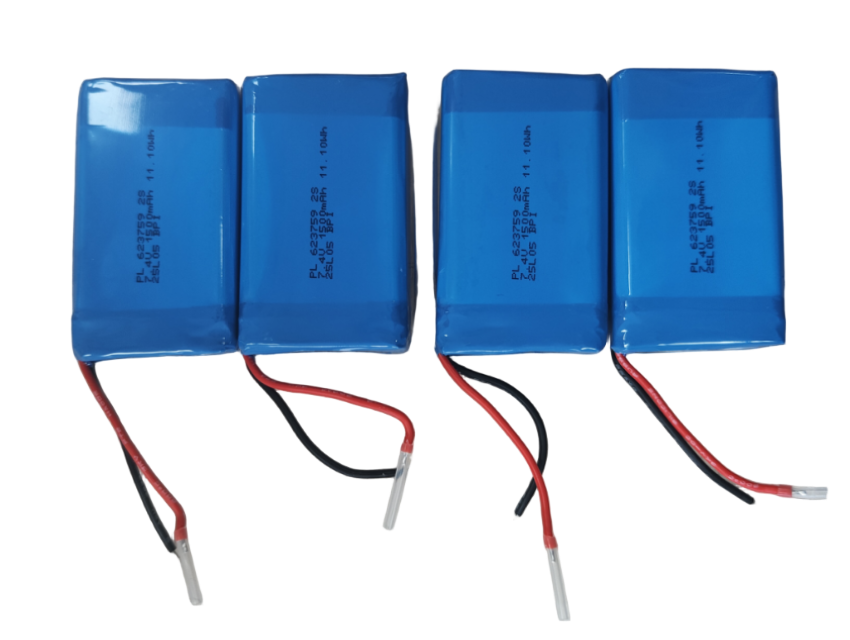
A high-performance racing drone battery from HCC, designed for maximum power and reliability.
1. Understand Your Core Requirements: Application is Key
The first step is to clearly define how you'll use your drone. The battery requirements for a weekend Outdoor Competition are vastly different from those needed for a Long-Endurance Racing Drone Battery used in mapping or inspection.
- For Competitive Racing: Prioritize ultra-high High-Discharge Rate Racing Drone Battery capabilities (often labeled with high "C" ratings like 100C or 120C). Low weight and instant power delivery are paramount. Runtime may be shorter, but peak performance is the goal.
- For Cinematography & Inspection: Look for a balance. You need a Commercial Aerial Filming Racing Drone Battery or Industrial Inspection Racing Drone Battery that offers good flight time (higher mAh) while still providing stable power for smooth maneuvers. Consistency and reliability over many cycles are crucial.
- For Extreme Environments: If you fly in hot climates or cold weather, specifically seek out a High-Temperature Resistant Racing Drone Battery or a Low-Temperature Adaptable Racing Drone Battery. These are engineered with specialized electrolytes and construction to maintain performance and safety outside standard temperature ranges.
2. Deciphering Battery Specifications: What Do the Numbers Mean?
When you look at a battery like an HCC Lithium Polymer Racing Drone Battery, you'll see a string of numbers: e.g., 6S 1300mAh 100C. Here's what they signify:
- Cell Count (S): Indicates voltage. A 6S battery has 6 cells in series, providing a nominal voltage of 22.2V. Higher "S" counts generally mean more power and speed, but also increased weight and cost.
- Capacity (mAh): This is the fuel tank size. A 1300mAh battery can theoretically deliver 1300 milliamps for one hour. Higher capacity usually means longer flight time but adds weight and physical size.
- Discharge Rate (C): This critical number, like 100C, tells you how fast the battery can safely deliver its energy. A 100C rating on a 1300mAh (1.3Ah) battery means it can continuously output 130A (100 x 1.3). For aggressive flying, a high C-rating is non-negotiable to prevent voltage sag and potential damage.
- Charge Rate (C): Look for a Fast-Charging Racing Drone Battery that supports higher charge rates (e.g., 5C) if you need quick turnaround between flights, but always follow manufacturer guidelines to preserve battery life.
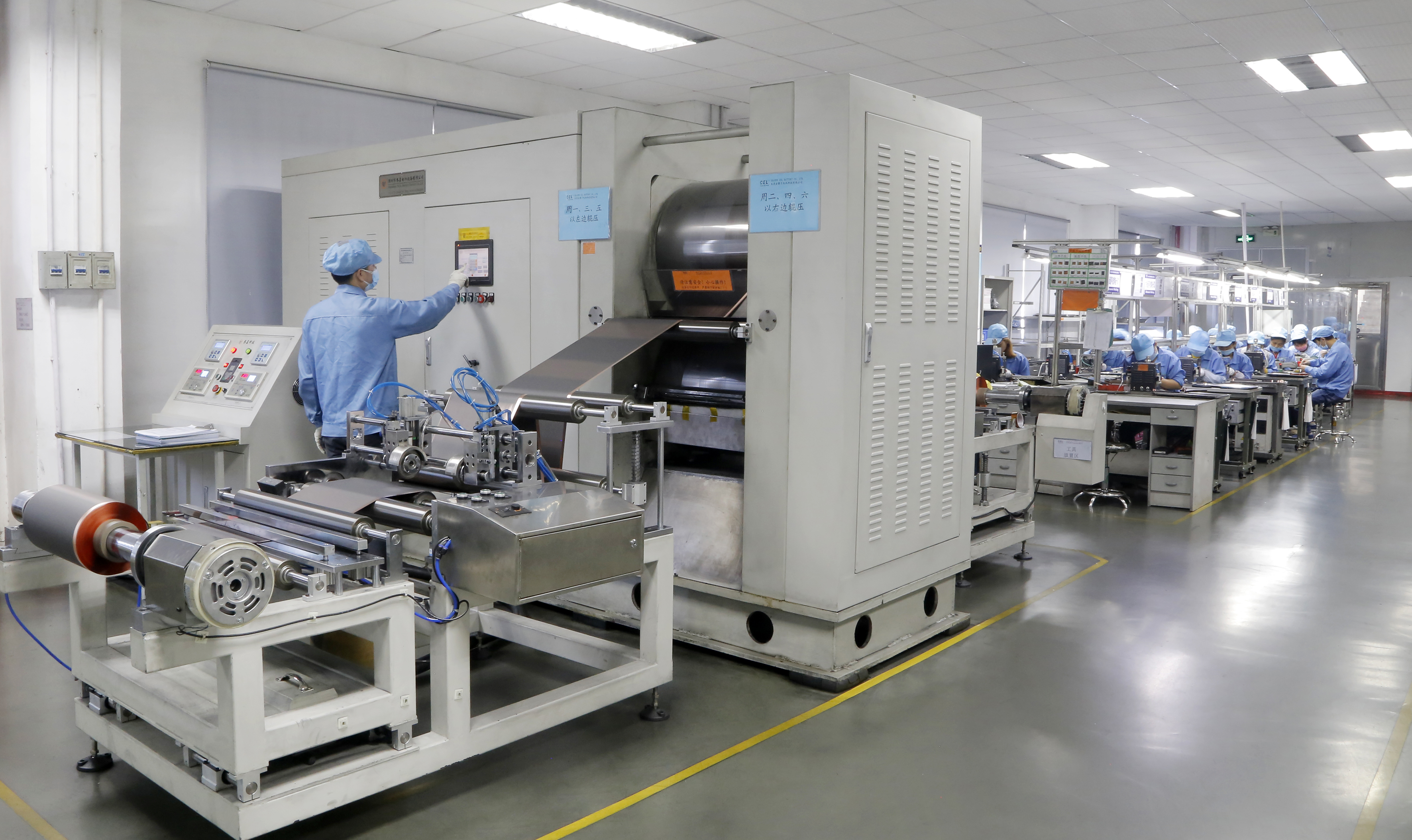
Precision manufacturing of electrode sheets at Topway's facility ensures consistent quality for high-performance cells.
3. The Importance of Quality, Safety, and Certifications
Not all Lithium Polymer batteries are created equal. The quality of the raw materials, particularly the High-Purity Lithium Core, directly impacts performance, longevity, and safety. A cheap, uncertified battery is a significant fire risk.
This is where choosing a reputable manufacturer like HCC (Topway) becomes vital. They don't just assemble packs; they ensure every component meets stringent standards. Always verify that your battery supplier holds relevant safety certifications. For instance, an UL Certified Racing Drone Battery has been independently tested to rigorous safety standards (UL 2054, UL 1642), giving you peace of mind. HCC's products have passed multiple international certifications, including:
- UL 2054:2021 & UL 1642:2020: Critical safety standards for battery systems and cells.
- IEC 62133-2:2017: International standard for the safety of portable sealed secondary cells.
- RoHS, CE: Ensuring the product is free of hazardous substances and meets EU health, safety, and environmental requirements.
- ISO 9001:2015: Certification of a quality management system, guaranteeing consistent manufacturing processes.
Investing in a certified battery from a company like Topway, which has "independent R&D capability" and is recognized as a "Top 100 Innovative Science and Technology Enterprise in the Guangdong-Hong Kong-Macao Greater Bay Area in 2025," is an investment in safety and reliability.
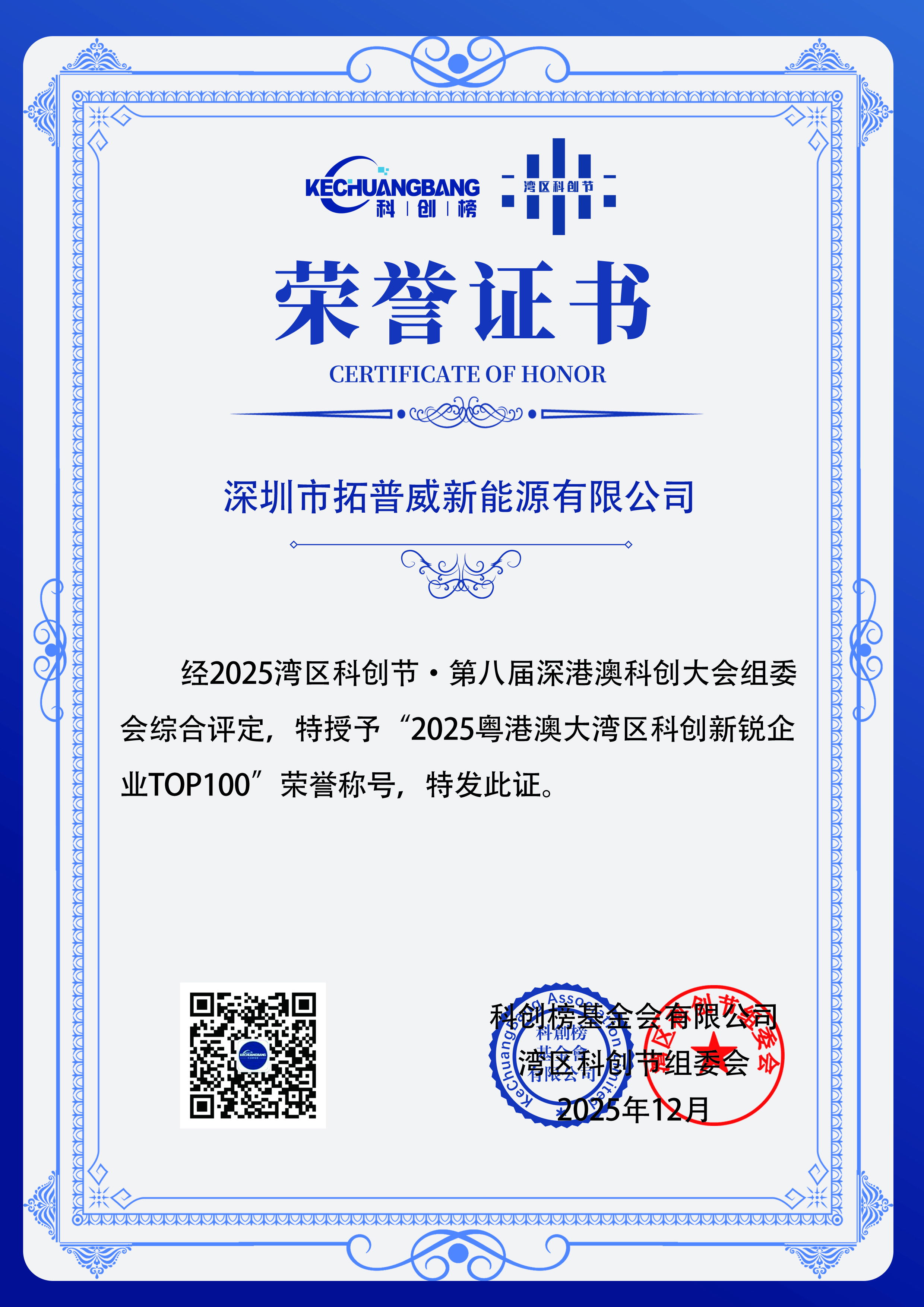
HCC (Topway) recognized for innovation in the Greater Bay Area, a testament to its R&D and technological strength.
4. Brand and Supplier Considerations: Why HCC Stands Out
With its sales and R&D center in Shenzhen, China, Topway (brand: HCC) represents a new wave of Chinese manufacturers that combine advanced technology with rigorous quality control. Their evolution from providing battery pack solutions to establishing their own production lines means they can offer better control over quality and more efficient service for both complex custom orders and large-volume demands.
For global customers, especially those involved in demanding applications like drone racing, partnering with a supplier that has a strong export focus and understands international compliance is crucial. HCC's products are "mainly exported to overseas markets," and their comprehensive certifications facilitate smooth global trade. Their commitment to providing "a more efficient and higher-quality delivery experience" is backed by their expanding production capabilities.
Contact HCC (Topway) for Your Racing Drone Battery Needs:
Phone: +86 755 81461866
WhatsApp: +86 18682160604
Email: sales@hcctop.com
Website: http://www.hcctop.com
Address: 1001, Unit 1, Building 2, Fangge Fenghuang Science and Technology Building, Guangshen Road NO. 218, Shenzhen, China.
5. Final Checklist Before You Buy
- Match to Drone: Ensure physical dimensions and connector type (XT60, XT90, etc.) are compatible.
- Check Weight: Heavier batteries affect agility and flight time. Find the optimal balance for your frame.
- Read Reviews: Look for user feedback on real-world performance, longevity, and customer service.
- Consider the Ecosystem: Does the supplier also offer quality chargers, storage bags, or parallel charging boards?
- Plan for the Future: If you're scaling up operations, choose a supplier like HCC that can handle large-volume orders consistently.
Selecting the perfect racing drone battery is a blend of science and practical need. By understanding your application, reading the specs correctly, prioritizing safety certifications, and choosing a technologically advanced and reliable supplier like HCC, you can power your drone to its maximum potential safely and efficiently. Remember, your battery isn't just a component; it's the powerhouse of your performance.
Have Questions or Need More Details?
Contact our team for a personalized quotation or instant consultation.
Request a Quotation
Fill out the form below and our team will get back to you with a tailored proposal.
WhatsApp Direct Chat
Prefer to chat in real-time? Message us on WhatsApp for instant assistance & quick answers.
- Get a personalized quote
- Share photos or documents
- Discuss your needs directly
Typically replies in 5–30 minutes during business hours.