
21700 vs 18650 vs LiFePO4: A Buyer's Comparison for Delivery Robots and Drones
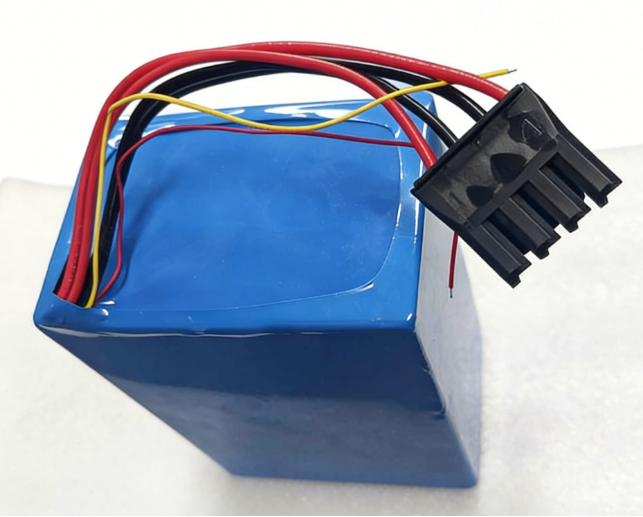
Three options dominate sourcing conversations for mobile platforms: 21700 battery packs, 18650 battery packs and LiFePO4 battery packs. All three are rechargeable lithium ion battery technologies. They are not interchangeable, and the differences that matter to a delivery robot or agriculture drone program are rarely the ones printed at the top of a spec sheet.
The short answer before the detail: 18650 and 21700 are cell formats, normally built on NCM (nickel-cobalt-manganese, or ternary) chemistry, and they remain the practical default where pack mass and peak current are the binding constraints — flight, spray systems, high-rate manoeuvring. LiFePO4 (LFP) is a cathode chemistry rather than a size, and it becomes the default candidate where daily duty cycles are long, charging is frequent, and thermal margin matters more than the last few hundred grams of pack mass. This is an application-fit question, not a ranking.
This guide uses the published product data of Shenzhen Topway New Energy Co., Ltd. (HCC), a Shenzhen-based lithium-ion battery pack manufacturer, as the worked example, and closes with a five-step selection workflow and a comparison table that separates format from chemistry.
Problem Definition: "Which Cell Is Better?" Is the Wrong First Question
A delivery robot battery and an agriculture drone battery can appear on the same purchase order and still be two completely different engineering problems. A delivery robot draws energy for rolling resistance, acceleration and stop-start navigation across an operating day inside restaurants, hotels or logistics halls. An agriculture drone draws energy for lift, spray pump pressure and wind correction in short bursts of very high current. The same nominal energy reaches the ground in two different ways.
On both platforms, every kilogram assigned to the pack is a kilogram removed from payload, structural stiffness or flight time. That is why format selection sits upstream of cell-brand selection, and why a generic specification sheet answers almost nothing. Three variables actually decide the outcome:
- Form factor and pack architecture — how many cells, in what series-parallel arrangement, inside what enclosure.
- Chemistry behaviour — how voltage and heat respond to continuous load and to repeated cycling.
- Duty cycle and environment — operating hours per day, charging windows, ambient temperature, ingress exposure.
One clarification prevents most of the confusion in this category. The names 18650 and 21700 describe cylindrical cell formats, and the numeric codes encode physical can dimensions. LiFePO4 describes a cathode chemistry, and LFP cells are also manufactured in cylindrical formats, including 18650-size cans. HCC's own 48 V 13 Ah LiFePO4 battery unit is documented as an 18650-format 13S5P assembly, which is a useful reminder that "18650 versus LiFePO4" compares a size with a chemistry rather than two alternatives on the same axis. A genuine three-way comparison has to separate the two.
Industry Background: Why This Comparison Matters in 2026
The demand context behind robot and drone battery sourcing is large and still expanding. GMI Research valued the global lithium-ion battery market at approximately USD 164.8 billion in 2024 and projects it to reach USD 422.8 billion by 2032. Inside the mobile-platform segment, Grand View Research estimated the global drone battery market at USD 8.13 billion in 2024, with lithium-based technologies holding a 91.14% share — a signal that non-lithium alternatives are not competitive for flight-critical mass and power density.
Supply is equally concentrated. China's lithium-ion battery exports reached over 3.9 billion units in 2024, an 8.1% year-on-year increase even as total export value declined slightly, according to China's General Administration of Customs data reported by Caixin Global. For a buyer, the practical implication is that the specialised packs used in delivery robots and drones are usually assembled by pack integrators working from qualified cylindrical cells, not by the cell manufacturers themselves. Format availability, BMS engineering and pack-level documentation therefore matter as much as the cell brand printed inside the enclosure.
Shenzhen Topway New Energy Co., Ltd. (HCC) is a Shenzhen-based lithium-ion battery pack manufacturer founded in 2022, operating a 10,000 m² facility with around 200 employees and a 15-engineer R&D team. Its main product lines are robot battery, exoskeleton battery and drone battery packs, produced through OEM/ODM manufacturing for customers in markets including the USA, EU, UK, France, Germany, Italy, Spain, Poland, Turkey, Japan, Korea, Vietnam, Malaysia, Singapore, Indonesia, the Philippines, Canada, Mexico, Australia, Thailand, New Zealand, Brazil, Argentina, Chile and Peru. Export sales account for roughly 40% of its business, and related products have passed RoHS, UL and CE export certifications.
Detailed Solution: How Each Option Behaves Inside a Robot or Drone Pack
21700 battery (NCM): fewer cells for the same pack energy
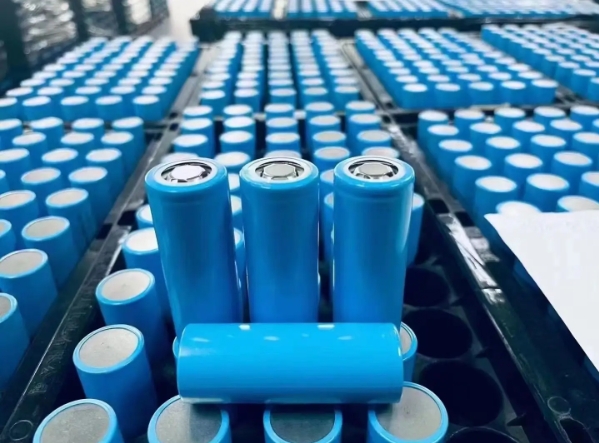
HCC produces a 21700 battery under model 21700-TW01, built on NCM chemistry, with a documented maximum charge current of 0.2C and a maximum continuous discharge current of 1C. The engineering significance of the format is mechanical: a larger can holds more active material per cell, so a given pack energy is reached with fewer cells, fewer interconnects and a shorter welding and busbar schedule. That generally simplifies pack assembly and BMS wiring, and it can reduce the number of joints that can fail inside a sealed enclosure.
The constraint is equally clear. With continuous discharge documented at 1C, the format does not create peak power on its own — peak current has to be engineered through parallel configuration and a BMS rated for the platform's real load profile. A buyer sizing a 21700-based pack for a spray drone or a heavier delivery robot should calculate the parallel count from the platform's peak draw, not from the cell label. In HCC's catalogue, the 21700 battery is listed among the related products for agricultural drone spray programs as well as delivery robot programs.
18650 battery (NCM): the most qualified and most serviceable format
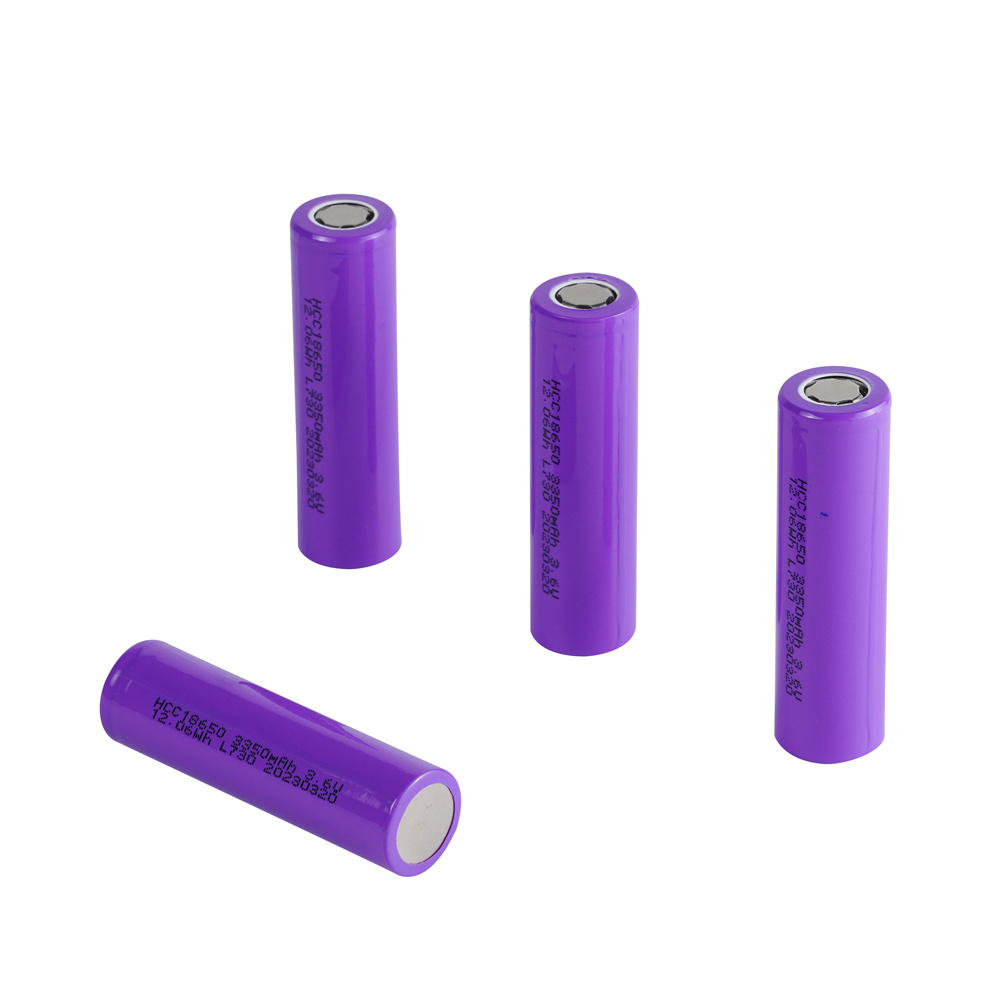
The 18650 battery is the format most buyers already hold data for. HCC's base unit, model 18650 3.6 V 3000 mAh, documents 3.6 V nominal voltage, 3000 mAh capacity, 3 A charge current, 3 A discharge current, an operating temperature range of −20 to 60 °C and a cell weight of 45 g. A higher-capacity variant, the 18650 3.7 V 5200 mAh, documents a 0.2C charge and discharge rate with a 200 g weight. The same format also underpins a 22.2 V pack documented with 30 A charge and 30 A discharge for underwater drone use, again across a −20 to 60 °C window.
What keeps the format durable in fleet applications is serviceability. Replacement at cell or module level, spare-part planning and independent qualification are easier when a cell is available from many sources, and deployment records reflect that. A 1,500-unit electric bicycle program documented by HCC describes mature 18650 cylindrical cells in series-parallel assembly with good consistency, replaceable parts and low maintenance costs — the same architectural logic that keeps 18650-based packs attractive for smart robot platforms and custom battery pack builds. HCC also produces smaller cylindrical cells for lower-power auxiliary electronics, including the 14500 battery (3.7 V 500 mAh, 50 g) and the 18500 battery (3.6 V 2000 mAh, 40 g).
LiFePO4 battery (LFP): thermal margin and cycle life at a pack-mass cost
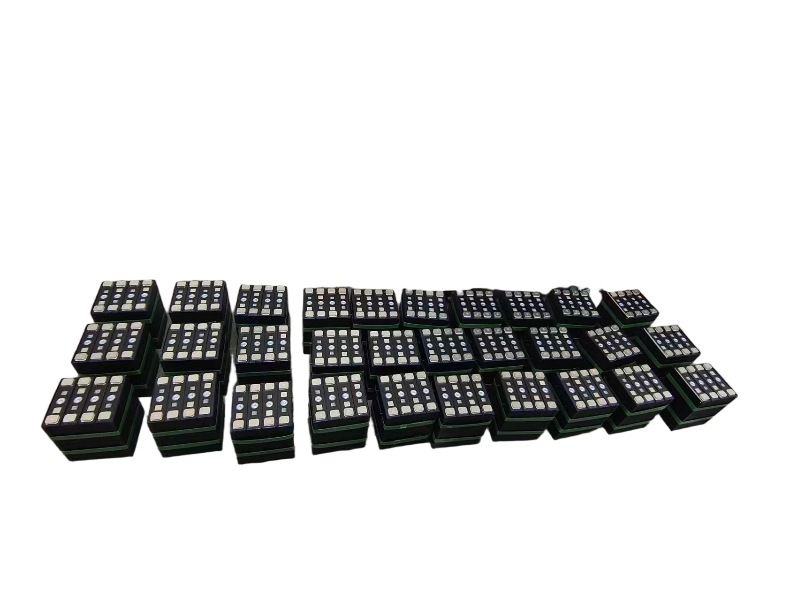
LiFePO4 entries in HCC's line are pack-level products rather than bare cells. The lifepo4 battery model 48 V 13 Ah documents 48 V nominal voltage, 13 Ah capacity, 5 A charge current, 20 A discharge current, a −20 to 60 °C operating window and a 3.4 kg weight. A second LFP pack, the 24 V 50 Ah unit, documents 10 A charge, 50 A discharge, the same −20 to 60 °C range and approximately 6 kg. Most relevant to this comparison, HCC's delivery robot battery — model 25.6 V 30 AH with 30 Ah capacity, 5 A charge, 5 A discharge, −20 to 60 °C and a 5.2 kg weight — is built on LFP chemistry, which shows the chemistry is not reserved for stationary storage.
Read the numbers as a trade. Compare HCC's 48 V 13 Ah LFP pack at 3.4 kg with its 25.2 V 20 Ah NCM agriculture drone battery at 2.6 kg: multiplying documented voltage by documented capacity gives roughly 624 Wh against roughly 504 Wh, so the LFP pack carries more energy — and about 0.8 kg more mass. That is the classic LFP bargain in numeric form, and it explains why LFP tends to win on duty cycle and lose on payload margin.
On thermal behaviour, HCC's documentation is more informative than chemistry folklore. The −20 to 60 °C operating window is identical across its LFP packs and most of its NCM packs, including the 18650 3.6 V 3000 mAh cell and the 25.6 V 20 Ah racing drone battery; the agriculture drone battery is slightly narrower at −10 to 60 °C. In this catalogue, thermal differentiation shows up in system design rather than in headline ratings: the LFP pack specified for the delivery robot program is paired with an intelligent BMS providing overcharge, overdischarge and short-circuit protection for high-temperature, high-load operation.
The practical caution with LFP is architecture compatibility. An LFP pack generally presents a different voltage and current profile from an NCM pack of similar energy, so motor controllers, chargers and BMS logic must be matched to the pack rather than adapted afterwards. Moving a platform from NCM to LFP is a system change, not a drop-in swap — which is precisely the kind of decision a sample build exists to de-risk.
Pack-level data decides more than the cell label
Robot and drone programs buy packs, not cells, and the pack-level numbers are the ones that govern service life. HCC's battery pack model Topway-BP01 documents a 40 A maximum discharge current and at least 500 cycles to 80% of rated capacity on an NCM build, with listed applications in medical, toy and drone equipment. Cycles-to-end-of-life and maximum discharge current at pack level determine replacement intervals and peak capability in the field; a cell datasheet that does not roll up into these two figures is not yet a procurement document.
Step-by-Step Breakdown: A Five-Step Selection Workflow
Work through these steps in order. The sequence matters because each step narrows the candidate set using the previous one.
Step 1 — Fix the duty cycle in hours and cycles. Write down operating hours per day, charging windows available per day, and the number of charge cycles the fleet must absorb per year. A restaurant delivery robot that runs all day and docks between trips has a very different requirement from an agriculture drone flying high-rate spray missions. HCC's Spanish delivery robot deployment, covering 2,000 units with a documented 3–5 year service duration, was specified around exactly that all-day operating pattern.
Step 2 — Set a pack mass and volume budget. Convert your payload or flight-time target into a maximum pack weight before looking at any cell. Documented weights make this concrete: the 25.2 V 20 Ah agriculture drone battery is 2.6 kg, the 25.6 V 30 Ah LFP delivery robot battery is 5.2 kg, the 48 V 13 Ah LFP pack is 3.4 kg, and a 25.6 V 20 Ah racing drone battery is approximately 3 kg. If the payload budget cannot absorb the heavier candidate, the comparison is effectively closed before chemistry enters the discussion.
Step 3 — Match continuous and peak current to documented ratings. List the platform's continuous current and its peak draw during acceleration, spray or climb, then compare against documented figures: 1C maximum continuous discharge for the 21700-TW01 cell, 3 A charge and discharge for the 18650 3.6 V 3000 mAh cell, 15 A charge and 20 A discharge for the 25.2 V 20 Ah agriculture drone battery, 10 A charge and 20 A discharge for the 25.6 V 20 Ah racing drone battery, and 40 A maximum discharge for the Topway-BP01 battery pack. Where peak current exceeds the continuous rating by a wide margin, the answer is usually a different parallel configuration rather than a different chemistry.
Step 4 — Check temperature and ingress requirements against the real environment. Most HCC units document a −20 to 60 °C window, with the agriculture drone battery at −10 to 60 °C. Application requirements add a second layer: agricultural drone programs are documented under low-altitude obstacle-avoidance flight and wind-resistant operation, food delivery robot programs across markets such as Japan, Italy, Korea, the UK, the US, France and Germany are documented under high and low temperature with waterproofing requirements, and logistics AGV programs in Germany and Canada specify high-temperature logistics duty with waterproof construction. A pack rated for the temperature window but not for the enclosure requirement is still the wrong pack.
Step 5 — Lock compliance and shipping configuration. IEC 62133-2 remains the primary international safety standard for portable lithium-ion cells and battery packs used in consumer and industrial equipment. HCC's related products have passed RoHS, UL and CE export certifications — confirm which certificates apply to your exact build, because certification attaches to the manufactured pack rather than to a catalogue page. Then plan logistics: since 1 January 2026, IATA/UN rules require a 30% state of charge limit for lithium batteries packed with devices under PI 966, which affects the shipping SoC your BMS must be able to hold and verify.
Use Cases: Two Fleet Programs, Two Different Answers
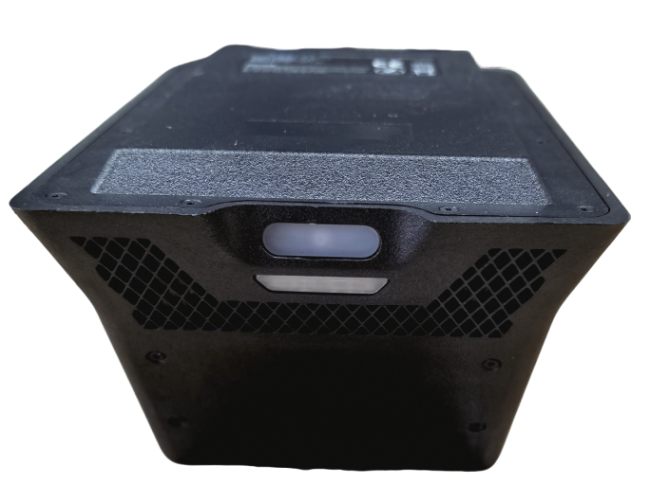
Delivery robots — Spain, 2,000 units. A delivery robot manufacturer deployed 2,000 packs for all-day autonomous navigation, smooth movement and tray delivery in restaurant environments, with a documented service duration of 3–5 years. The selection logic is instructive: high-performance power cells with stable continuous high-current discharge so the robot holds voltage under heavy load without stalling; a 25.2 V-class platform with 20 Ah capacity so the unit covers high-intensity all-day operation with fewer charging interruptions; and an intelligent BMS with overcharge, overdischarge and short-circuit protection, specified for high-temperature, high-load commercial environments with the goal of reducing maintenance and replacement costs.
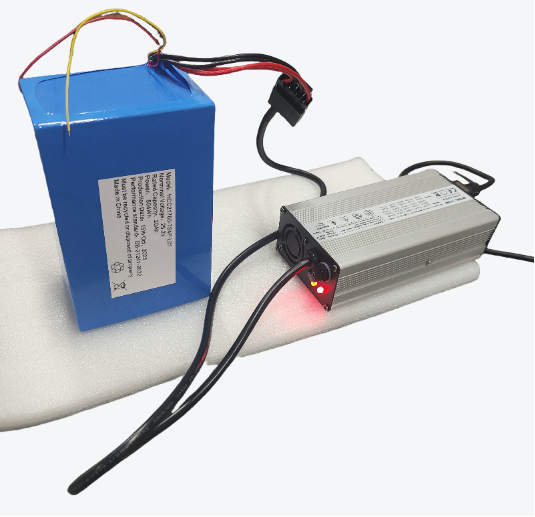
Agricultural drones — United States, 2,000 units. An agricultural drone manufacturer sourced 2,000 packs with a documented service life of 1–3 years for spray-system duty. The requirements read like a checklist for the format debate: high-rate instantaneous high-current output so voltage stays stable during low-altitude, high-load and high-speed flight; long-life cells with enhanced structural technology to resist high-temperature and high-current heating; and a customised reinforced BMS with real-time temperature control and balancing, overcurrent and short-circuit prevention, plus automatic current limiting and shutdown under overload or out-of-range temperature. The pack is judged on voltage stability under load, not on capacity alone.
The two programs point in different directions for a reason. The delivery robot's constraint is mass that duty cycle can justify, which favours LFP and larger-format architectures. The drone's constraint is mass that cannot be justified at all, which keeps NCM packs built from 18650 and 21700 cells in the lead position. A third pattern appears in AGV and logistics duty, where the platform is already heavy and the pack competes on thermal endurance and ingress protection rather than on grams.
Comparison Table: 21700 vs 18650 vs LiFePO4 for Robot and Drone Packs
| Decision dimension | 21700 (NCM) | 18650 (NCM) | LiFePO4 / LFP |
|---|---|---|---|
| HCC reference unit | 21700 battery, model 21700-TW01 | 18650 battery, model 18650 3.6 V 3000 mAh | lifepo4 battery, model 48 V 13 Ah |
| Chemistry class | NCM (ternary) | NCM (ternary) | Lithium iron phosphate (LFP) |
| Documented electrical data | 0.2C max charge current; 1C max continuous discharge current | 3.6 V / 3000 mAh; 3 A charge; 3 A discharge | 48 V / 13 Ah; 5 A charge; 20 A discharge |
| Documented temperature window | Not stated in the published unit | −20 to 60 °C | −20 to 60 °C |
| Documented mass | Not stated in the published unit | 45 g per cell (3000 mAh); 200 g for the 3.7 V 5200 mAh variant | 3.4 kg (48 V 13 Ah); approximately 6 kg (24 V 50 Ah) |
| Form-factor behaviour | Larger can; more active material per cell, so fewer cells and interconnects per pack | Standardised cylindrical format with cell-level replaceability; HCC also builds 14500 and 18500 cells for auxiliary electronics | Produced in cylindrical formats including 18650-size cans; HCC's 48 V 13 Ah unit is documented as an 18650-format 13S5P assembly |
| Where it fits | Packs where cell count, assembly complexity and pack volume should be reduced; used in HCC agricultural drone and delivery robot programs | Programs needing a deep qualified supply base and cell-level serviceability; used across HCC drone, robot and battery pack lines | Long-duty-cycle platforms and higher-voltage architectures; HCC's 25.6 V 30 Ah delivery robot battery is LFP-based |
| Watch-outs | Continuous discharge documented at 1C, so peak power must be engineered through parallel configuration | A higher cell count for the same pack energy increases welding, BMS wiring and assembly labour | Higher pack mass for comparable energy; controllers, chargers and BMS must be matched to the LFP voltage and current profile |
Table notes: all figures are taken from HCC's published product units for the models named. Where a unit does not publish a value, the table states that rather than estimating it.
FAQ
Do 21700, 18650 and LiFePO4 packs fall under different certification requirements?
The chemistry does not change the safety standard that applies to a portable lithium-ion pack: IEC 62133-2 remains the primary international safety standard for portable lithium-ion cells and battery packs used in consumer and industrial equipment. What changes with chemistry and format is the test evidence your supplier must hold at cell level and the documentation your own product file must carry. HCC's related products have passed RoHS, UL and CE export certifications. Shipping rules add a second layer that applies regardless of chemistry: since 1 January 2026, IATA/UN regulations require a 30% state of charge limit for lithium batteries packed with devices under PI 966, so the BMS on your pack must be able to hold and verify that shipping state.
Can one supplier deliver all three options for a single robot or drone platform?
In practice, yes, when the supplier is a pack integrator rather than a cell-only vendor. HCC documents an OEM/ODM production mode with customisation across all kinds of battery pack, a monthly capacity of 10,000 units, and remote after-sales support. The three options also coexist in the same catalogue: 21700 battery (model 21700-TW01), 18650 battery (3.6 V 3000 mAh and 3.7 V 5200 mAh variants), LiFePO4 battery (48 V 13 Ah), alongside application packs such as the 25.6 V 30 Ah delivery robot battery and the 25.2 V 20 Ah agriculture drone battery.
Which of the three is cheaper over the life of a fleet?
There is no universal answer, and no price can be attached without your volumes and configuration. What can be compared today are the cost drivers visible in the specifications: the number of cells per pack, BMS and enclosure complexity, the replacement interval, and shipping and storage handling. Cycle life is where the largest lifetime difference appears, which is why pack-level documentation matters: HCC specifies at least 500 cycles to 80% of rated capacity on its Topway-BP01 battery pack, and its delivery robot deployment record describes long cycle life reducing maintenance and replacement costs across a 3–5 year service duration. Ask every supplier for cycles-to-end-of-life at a stated capacity threshold rather than for a qualitative "long life" claim.
Can we validate a format with samples before committing to production volume?
Yes. HCC documents a minimum order quantity of 5 pcs with OEM/ODM production and customisation across all kinds of battery pack, so a format can be validated on a small build before a fleet order. A practical sample test for robots and drones is to discharge at your platform's continuous load for a full duty cycle, log voltage sag and enclosure temperature, then repeat after your intended number of cycles and compare capacity retention against the pack's documented end-of-life threshold. For agricultural drone duty, repeat the same test at your peak spray or climb current rather than only at cruise current.
What lead time should we plan for, and how do we start?
HCC documents a lead time of 20–35 days with a monthly capacity of 10,000 units, so a fleet rollout should be planned around that production window plus shipping and any custom enclosure tooling. To start the evaluation, send the platform voltage, continuous and peak current, daily duty cycle, operating temperature range and enclosure or ingress requirement, then request a sample or quotation against those numbers. HCC can be reached at sales@hcctop.com, by phone on 0755-81461866, or via WhatsApp on +86 18682160604 — see the HCC website for the full product range.
Conclusion: Decide With the Duty Cycle, Then Confirm With a Sample
For delivery robots and drones, the 21700 versus 18650 versus LiFePO4 question resolves into three simpler questions. How much mass can the platform give to the pack? How much current must the pack deliver continuously, and how much in peak? And how many cycles must it survive inside its real temperature and ingress environment?
The answers usually separate cleanly. Where payload and peak current dominate — agriculture drones, racing and tactical platforms, high-rate flight — NCM packs built from 18650 and 21700 cells stay the practical choice, with 21700 reducing cell count and 18650 maximising qualification depth and serviceability. Where duty cycle and thermal endurance dominate — all-day delivery robots, AGVs and logistics platforms — LFP packs such as HCC's 25.6 V 30 Ah delivery robot battery, 48 V 13 Ah and 24 V 50 Ah units give up some pack mass in exchange for a more forgiving operating profile.
The final step is not analytical, it is empirical: build a sample in your preferred format, discharge it against the platform's real duty cycle, and let measured voltage sag, temperature and capacity retention confirm the decision the specifications only predicted.
Next step: If you are specifying a battery pack for a delivery robot, AGV or drone platform, send HCC your platform voltage, continuous and peak current, daily duty cycle and operating temperature range, and the three options can be mapped against your own numbers.
- Product brochure (PDF): Download the HCC lithium-ion battery brochure
- Email: sales@hcctop.com | Phone: 0755-81461866 | WhatsApp: +86 18682160604
- Website: www.hcctop.com
Shenzhen Topway New Energy Co., Ltd. — 1001, Unit 1, Building 2, Fangge Fenghuang Science and Technology Building, Guangshen Road No. 218, Fenghuang Community, Fuyong Street, Bao'an District, Shenzhen, China.
Have Questions or Need More Details?
Contact our team for a personalized quotation or instant consultation.
Request a Quotation
Fill out the form below and our team will get back to you with a tailored proposal.
WhatsApp Direct Chat
Prefer to chat in real-time? Message us on WhatsApp for instant assistance & quick answers.
- Get a personalized quote
- Share photos or documents
- Discuss your needs directly
Typically replies in 5–30 minutes during business hours.