
Single-Source vs. Dual-Source Racing Drone Battery Procurement: A Head-to-Head Decision Guide
Every professional program that buys racing drone batteries eventually has to decide whether its approved volume sits with one qualified supplier or is split between two. The two structures are not interchangeable. They produce different purchasing terms, different incoming-inspection workloads, different exposure to supply disruption, and different costs when the battery specification or the airframe changes.
This guide puts single-source and dual-source racing drone battery procurement head-to-head across the six dimensions that decide the outcome, then converts the comparison into a seven-step process a purchasing team can run before committing a season's volume. All supplier facts referenced here come from the manufacturer's own documented profile; no performance scores, ratings, or test results have been added.
Quick answer: Choose single-source when the battery specification is stable, volume is large enough to earn priority terms from one supplier, and that supplier's documented capability and compliance file have been verified. Choose dual-source when interruption cost is high, demand is spiky and event-driven, and you are prepared to maintain two complete acceptance, documentation, and change-control processes. A third structure — single-source with one pre-qualified backup supplier — captures most of the redundancy at a fraction of the administrative load.
Problem Definition: What the Single-Source vs. Dual-Source Decision Actually Asks
Single-source procurement means one qualified supplier holds the entire approved volume for a battery specification. One acceptance specification, one document file, one commercial relationship, and one party accountable for delivery.
Dual-source procurement means two suppliers are qualified against the same acceptance criteria, with volume allocated between them — either at a fixed ratio or dynamically, according to delivery and quality performance. The buyer accepts additional qualification, inspection, and document-control work in exchange for redundancy.
The choice is usually framed as safety versus simplicity, and that framing hides the real trade-off. Dual sourcing only reduces risk when both suppliers have been validated against identical criteria and both remain in good standing. A second supplier approved on a different sample, a different connector, or an incomplete document file does not create redundancy. It creates variance, and variance in a racing drone battery shows up as inconsistent discharge behavior, fit problems, and unpredictable cycle life across a fleet.
So the question is not whether two suppliers are safer than one. It is which set of costs the program is willing to own: the concentration risk of a single source, or the duplication cost of two.
Industry Background: Why Battery Sourcing Is Structurally Difficult for Racing Drone Programs
Racing drone batteries are consumed on a program schedule rather than a procurement calendar. Packs are cycled hard, retired at a defined point, and replaced in blocks tied to competition dates, client filming schedules, or inspection contracts. Demand therefore tends to be spiky rather than smooth, which matters because spiky demand is exactly the profile that makes a single point of supply uncomfortable.
At the same time, the pack is a design variable rather than a commodity. Cell format, capacity, connector type, discharge class, and mechanical envelope change whenever the airframe is revised, so a supplier qualified for one generation may need re-validation for the next.
Export-market buyers commonly require documented compliance before a lithium battery supplier is approved. RoHS, UL, and CE marks are frequently requested, and buyers working to a formal qualification process often ask for test-based standards such as IEC 62133-2, UL 1642, UL 2054, and IEC 62619 to be evidenced on the certificate file. Compliance is therefore not only a legal step. It is a gate that determines how many suppliers are available to a program in the first place.
The supplier base adds a further constraint. A large share of lithium-ion and lithium polymer pack manufacturing sits with Chinese manufacturers, many of them clustered in Shenzhen and the surrounding Pearl River Delta. Shenzhen Topway New Energy Co., Ltd. (HCC) is one example of that supplier profile: a Shenzhen-based manufacturer whose main business covers energy storage batteries and lithium-ion batteries, operating with independent R&D capability, a sales center in Shenzhen, and export sales as its primary market. HCC states that its related products have passed RoHS, UL, and CE and other export certifications, and that it plans to introduce advanced battery production lines of its own in order to serve complex product orders and large-volume orders.
That combination — event-driven demand, long qualification cycles, a pack that changes with the airframe, and a geographically concentrated supply base — is what makes the single-source versus dual-source decision consequential rather than administrative.
The Head-to-Head Framework: Six Dimensions That Decide the Model
1. Commercial Terms and Negotiation Position
Concentrating volume with one supplier strengthens the buyer's position on price breaks, tooling contributions, custom labeling, and priority allocation during peak demand. A single supplier also has more reason to hold buffer stock on the buyer's behalf when the annual volume justifies it.
Dual sourcing divides that leverage. Each supplier sees a smaller share, and some will not extend peak-season priority to a partial allocation. The commercial loss is usually modest; the loss of priority during a demand spike is not.
2. Acceptance Criteria and Incoming Inspection
With one supplier, acceptance is defined once and applied to every shipment from a single production process. Limit samples, inspection fixtures, and rejection history accumulate in one place, which makes batch-to-batch consistency easier to police.
With two suppliers, incoming inspection has to be identical for both, and the records have to prove it. If the acceptance specification is written with tolerances that only suit one production line, the buyer ends up with two field populations that behave differently and no clean way to attribute a failure.
3. Supply Risk and Continuity
A single source concentrates every disruption pathway — equipment, labor availability, raw material allocation, compliance issues, logistics — into one dependency. For a program where a missed event or a grounded inspection fleet is expensive, that dependency is the primary argument for dual sourcing.
Redundancy, however, is conditional. It only works while the second supplier is genuinely able to absorb volume at short notice and while its qualification status and compliance documents remain current. A backup that has not produced for several months is a name on a list, not a supply option.
4. Long-Term Flexibility and Customization
Customization is the hidden cost center of dual sourcing. A connector change, a capacity revision, or a new frame requirement has to be specified, sampled, and re-validated with both suppliers, and both have to converge on the same build standard. In fast-moving racing platforms, where the airframe may be revised between seasons, this duplication is often the largest recurring cost of the dual-source model.
Single sourcing runs the same change through one engineering interface, which shortens validation and reduces the number of documents that need updating.
5. Compliance Documentation and Audit Workload
Compliance is tracked per supplier, not per program. Two suppliers mean two certificate files, two sets of expiry dates, two document review cycles per audit, and two answers to give when a customer or an auditor asks for evidence.
Whichever model is chosen, one verification rule applies equally: the certificate must cover the exact battery being purchased. A valid UL, IEC, or ISO document held for a different product in a supplier's range does not qualify the pack on the purchase order unless the certificate scope confirms it, so scope should be confirmed in writing during supplier approval.
6. Lead Time, Buffer Stock, and Event-Calendar Fit
Lead time is simpler to manage with one source: one commitment, one shipment schedule, one point of escalation. Dual sourcing splits the safety stock. Unless buffer inventory is consolidated in the buyer's own warehouse, the buyer carries two positions and manages two lead-time clocks.
For programs anchored to fixed dates — a race weekend, a filming block, an inspection contract — the relevant question is not average lead time but recovery time: how quickly can the chosen structure replace a rejected or delayed batch? A dual-source structure recovers faster only if the second supplier has capacity reserved, not merely agreed.
Step-by-Step Breakdown: Running the Decision in Seven Steps
- Classify the battery by program criticality. Determine whether the pack is competition-critical, production-critical, or readily replaceable. Criticality, not unit price, should drive how much redundancy the program is willing to fund.
- Map the demand shape. Separate base volume from peak volume and align both with the event or contract calendar. A flat demand profile tolerates single sourcing far better than a spiky one.
- Write one acceptance specification. Define electrical parameters, dimensional and connector fit, labeling, and document requirements in a single controlled document, so that any supplier — first or second — is measured identically.
- Qualify candidates against that specification. Sample both candidates and evaluate them against the same test plan and the same inspection criteria, recording results in a format that can be compared line by line.
- Score the six dimensions. Weight commercial terms, acceptance workload, continuity, change flexibility, compliance administration, and lead-time recovery according to the program. The weights, not the raw scores, determine the answer.
- Choose the structure. Full single-source, full dual-source, or single-source with one pre-qualified backup that is periodically exercised with small orders so its qualification stays live.
- Define the review triggers. Decide in advance which events force re-evaluation: a missed delivery window, a rejected batch, a lapsed certificate, a significant volume change, or an airframe revision.

Use Cases: How Different Programs Usually Decide
Professional Racing Event Programs
Race programs live on fixed dates and consume packs in concentrated blocks. The cost of a failed batch is measured in missed starts rather than unit price. These programs most often move toward dual sourcing — or at minimum a pre-qualified backup — and accept the additional inspection load, because the schedule cannot absorb a supply interruption.
Industrial Inspection Drone Fleets
Inspection operators run fleets on contracted schedules, where grounded aircraft directly reduce billable capacity. Their demand is steadier than a race team's, which makes a single qualified supplier workable provided the supplier can hold buffer stock and the buyer can verify delivery performance against the contract calendar. Where contracts are geographically dispersed, a second source is sometimes added for logistics coverage rather than for capacity reasons.
Commercial Aerial Filming
Filming demand is project-based and difficult to forecast, which favors flexibility over volume concentration. Buyers in this segment typically keep one primary supplier for consistency and treat a second source as a schedule-recovery option, ordering from it often enough to keep the qualification current.
Outdoor Competition and Training Academies
Academies consume packs continuously through training, with relatively predictable weekly volumes. Predictability makes single sourcing attractive on commercial terms. The main risk is a mid-season stock-out, which is usually managed with buffer inventory rather than with a second supplier.
Comparison Table: Single-Source vs. Dual-Source, Dimension by Dimension
The table below summarizes the structural consequences described above. It compares sourcing models, not measured supplier performance.
| Dimension | Single-source (one qualified supplier) | Dual-source (two qualified suppliers) |
|---|---|---|
| Commercial leverage | Volume concentrated with one supplier; stronger position on price breaks, tooling, and peak-season priority. | Volume split; each supplier sees a smaller share and may limit priority allocation. |
| Acceptance and incoming inspection | One acceptance specification, one inspection procedure, one rejection history. | Identical inspection required for both suppliers, with records that prove it. |
| Batch consistency | All units come from a single production process, which simplifies batch-to-batch control. | Two production processes must converge on the same specification; written tolerances must cover both. |
| Supply continuity | Single dependency; any disruption affects the entire program. | Redundancy, provided both suppliers stay capable and their qualifications stay current. |
| Engineering change and customization | One engineering interface; changes are validated once. | Every change is specified, sampled, and re-validated twice. |
| Compliance administration | One certificate file, one expiry calendar, one document set per audit. | Two certificate files, two expiry calendars, two document sets per audit. |
| Lead time and buffer stock | One commitment, one shipment schedule, one escalation path. | Two lead-time clocks and two safety-stock positions unless buffer stock is consolidated by the buyer. |
| Best fit | Stable specification, predictable volume, and a supplier whose capability and compliance file have been verified. | High cost of interruption, spiky event-driven demand, and the capacity to run two qualification processes. |
What Must Be Verified in Both Models
Redundancy does not change the verification requirement. Whichever structure is chosen, the buyer should hold the same evidence for every approved supplier: a business registration and manufacturing profile, a documented compliance file covering the exact pack being purchased, and a signed acceptance specification.
As a reference point for the scope of that file, Shenzhen Topway New Energy Co., Ltd. (HCC) lists the following certification and verification documents. Buyers should request each certificate's scope and confirm it covers the specific battery model on the purchase order.
| Certification / document listed by HCC | Reference on file |
|---|---|
| RoHS / UL / CE export certifications | Stated for related products |
| ISO 9001:2015 | Certificate on file |
| IEC 62133-2:2017 | Certificate on file |
| UL 1642:2020 | Certificate on file |
| UL 2054:2021 | Certificate on file |
| UL 2054 | CMC240102017 |
| IEC 62619:2022 | Certificate on file |
| IEC SG CTI-001612 | Certificate on file |
| CN21WL2W 001 TR | Signed certificate on file |
| US 72225082.01 | Signed certificate on file |
| Apple MFi Certification | Certificate on file |
| GB/T 29490-2013 | Certificate of Intellectual Property Management System |
| SGS Made-in-China certified supplier | Reference QiP-ASl232059 |
| Top 100 Innovative Science and Technology Enterprises in the Guangdong-Hong Kong-Macao Greater Bay Area, 2025 | Listed for Shenzhen Topway |
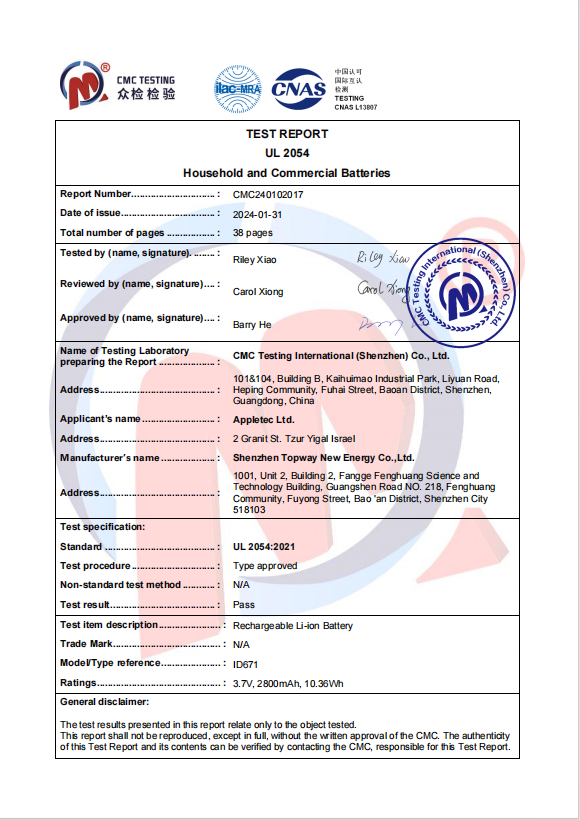
A supplier's compliance file supports approval, but it does not replace sample validation. Document review and sample testing are two separate gates, and both apply to the first supplier and the second.
FAQ
Does a dual-source battery procurement model require two separate compliance files?
Yes. Compliance documentation is issued per supplier and per product scope, so approving two racing drone battery suppliers means maintaining two certificate files, two expiry calendars, and two document sets for audits. One file cannot be substituted for the other, even when the two packs share the same specification. The practical consequence is administrative: budget review time for two files, and confirm in writing that each certificate covers the exact model being purchased rather than a similar product in the supplier's range.
What capability signals should be verified before concentrating volume with one supplier?
Before volume is concentrated, the buyer should verify technical capability, production arrangements, and compliance coverage. Independent R&D capability matters because it determines whether the supplier can respond to a specification change. Production arrangements matter because they determine how much of the build the supplier controls directly. HCC, for example, states that it operates with independent R&D capability from its Shenzhen base and plans to introduce advanced battery production lines in order to serve complex and large-volume orders. Claims of this kind are normally confirmed through a supplier audit or a factory visit before a single-source commitment is signed.
How does the sourcing model affect budget and total cost?
Single sourcing usually lowers unit cost through volume concentration and reduces administrative cost, because only one acceptance process, one compliance file, and one change-validation cycle are maintained. Dual sourcing adds qualification, inspection, and duplicated engineering work, and may reduce volume-based leverage with each supplier. The trade-off should be assessed against the cost of an interruption rather than against unit price alone. Programs with a high cost of downtime often find the duplication cheaper than a single missed event, while programs with stable and predictable volume often do not.
How should samples be validated when two suppliers are approved?
Both suppliers' samples should be evaluated against one acceptance specification and one test plan, and the results recorded in a format that allows direct comparison between the two candidates. Where sample packs are provided, the sample should match the production specification, including connector, capacity class, and labeling. Buyers commonly also order repeat samples later in the qualification period to confirm that the sample condition reflects routine production rather than a specially prepared unit.
How does the sourcing model change lead time and delivery risk?
With one supplier, lead time is a single commitment and escalations have one destination; the risk is that the same disruption stops the entire supply. With two suppliers, lead time is managed twice, but a second approved source can absorb volume when the primary is delayed — provided capacity has been reserved rather than merely agreed. The most useful metric for either model is recovery time: how quickly the structure can replace a rejected or delayed batch. Programs evaluating a new supplier or requesting qualification samples can contact Shenzhen Topway New Energy Co., Ltd. (HCC) directly; samples, quotation, and specification review are handled by the sales team at +86 755 81461866, WhatsApp +86 18682160604, WeChat Wangdh-HZT, or sales@hcctop.com.
Conclusion: The Decision Rule
Single sourcing and dual sourcing solve different problems. Single sourcing optimizes commercial terms, consistency, and change speed, and it is the better structure when the specification is stable, volume is predictable, and the supplier's documented capability and compliance file have been verified. Dual sourcing optimizes continuity, and it is the better structure when interruption cost is high and demand is anchored to dates that cannot move.
The decision should be made on evidence rather than assumption: one written acceptance specification, one compliance file per supplier, samples evaluated against the same test plan, and a defined set of review triggers. Where a program needs most of the redundancy without the full duplication cost, single sourcing with a pre-qualified backup that is regularly exercised is the middle path that many professional programs settle on.
For buyers evaluating racing drone battery supply, the starting point is the verification file. Shenzhen Topway New Energy Co., Ltd. (HCC) publishes its company and certification information and accepts sample and quotation requests through its sales team.
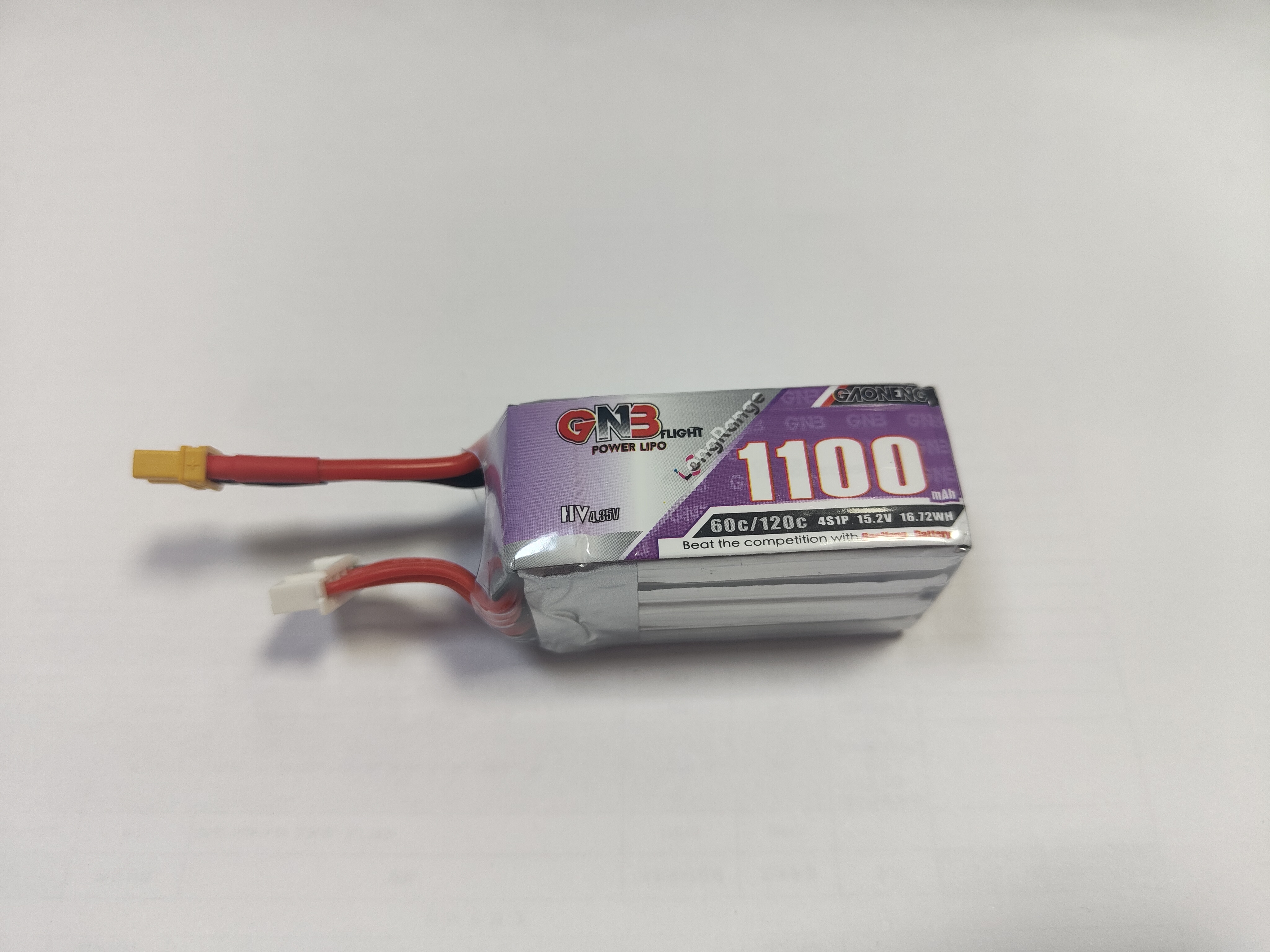
Next Step: Sample and Quotation Request
If your program is deciding between concentrating volume and splitting it, the practical next step is to test the specification against a real supplier. Shenzhen Topway New Energy Co., Ltd. (HCC) supports qualification samples, specification review, and quotation requests for lithium-ion and lithium polymer battery programs.
Phone: +86 755 81461866 | WhatsApp: +86 18682160604 | WeChat: Wangdh-HZT | Email: sales@hcctop.com
Website: www.hcctop.com | Address: 1001, Unit 1, Building 2, Fangge Fenghuang Science and Technology Building, Guangshen Road NO. 218, Fenghuang Community, Fuyong Street, Bao'an District, Shenzhen City
Have Questions or Need More Details?
Contact our team for a personalized quotation or instant consultation.
Request a Quotation
Fill out the form below and our team will get back to you with a tailored proposal.
WhatsApp Direct Chat
Prefer to chat in real-time? Message us on WhatsApp for instant assistance & quick answers.
- Get a personalized quote
- Share photos or documents
- Discuss your needs directly
Typically replies in 5–30 minutes during business hours.