
Top 5 Application-Specific Lithium-Ion Battery Picks for Medical and Racing Drone Builds

Production line at Shenzhen Topway New Energy Co., Ltd. (HCC), Shenzhen, China.
A medical device battery and a racing drone battery share almost nothing on a specification sheet. The medical pack has to be quiet, predictable, and fully documented. The racing drone pack has to survive high-rate discharge lap after lap without adding weight to the frame. What they do share is the cost of getting it wrong: a recall, a grounded fleet, or an in-flight failure.
This ranking curates five battery solutions from the HCC product range — medical battery, racing drone battery, 24V lithium ion battery, custom battery pack, and 18500 battery — and orders them by application fit rather than nominal capacity. HCC is the short name for Shenzhen Topway New Energy Co., Ltd., a lithium-ion battery supplier based in Shenzhen, China, whose main products are robot batteries, exoskeleton batteries, and drone batteries. Each entry below maps to one of the two high-stakes sectors and explains why it earns its place on a buyer’s shortlist.
Problem Definition: Why Medical and Racing Drone Batteries Cannot Share a Sourcing List
Both sectors sit inside the lithium-ion category, but they pull the specification in opposite directions.
Medical equipment asks for output that stays consistent and traceable. Hospital procurement teams audit the documentation chain, the failure modes, and the decommissioning process rather than the peak discharge rate. The pack has to deliver the same voltage across a long service life, and every replacement unit has to trace back to the same approved source.
Racing drones ask for the inverse. Instantaneous current, minimal mass, and tolerance for repeated high-rate cycles. A protection architecture designed for a hospital cart becomes dead weight on a racing frame; a bare high-rate cell architecture designed for a racing frame would never clear a hospital risk review.
The same failure mode — over-discharge — carries two completely different prices depending on the sector. In one case it is a device pulled from service. In the other it is a pack that has to be retired before it damages the platform.
That divergence is why a generic “best battery” list is useless for either buyer. Ranking has to be anchored to the application.
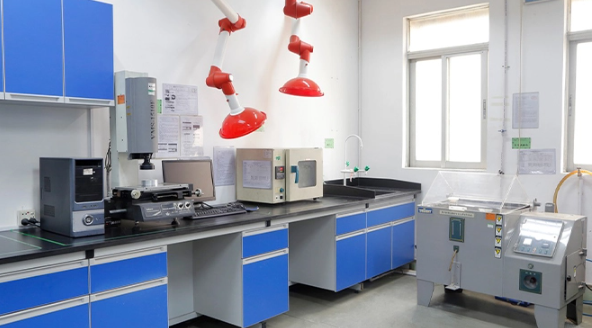
Test center operations supporting cell grading and pack-level validation.
Industry Background: Two Segments Growing Under Tighter Rules
The scale behind both sectors explains why sourcing teams now treat them as separate procurement categories rather than one lithium-ion line item.
GMI Research valued the global lithium-ion battery market at approximately USD 164.8 billion in 2024, with projections to reach USD 422.8 billion by 2032. China’s lithium-ion battery exports reached over 3.9 billion units in 2024, an 8.1% year-on-year increase, according to General Administration of Customs data reported by Caixin Global.
The drone segment is measured separately. Grand View Research estimated the global drone battery market at USD 8.13 billion in 2024, with lithium-based technologies holding a 91.14% share. Cognitive Market Research placed the medical machine battery market at USD 2.22 billion in 2024, driven by the adoption of robotic surgery and portable diagnostic devices.
Compliance thresholds have tightened alongside that growth. IEC 62133-2 remains the primary international safety standard for portable lithium-ion cells and battery packs used in consumer and industrial equipment. Separately, effective January 1, 2026, IATA/UN regulations require a 30% State of Charge limit for lithium batteries packaged with devices under PI 966 — a rule that lands directly on medical device kits and drone kits moving by air.
How These Five Picks Were Ranked
Ranking here follows four filters, applied in order:
- Application fit first. A specification that wins on a racing frame can fail in a clinical environment, and the reverse is equally true. Fit is judged against the sector, not against a headline number.
- Traceable compliance chain. Export certifications, standards alignment, and documentation availability are weighed before performance claims.
- Documented risk controls. Over-discharge, thermal behaviour, and cell consistency measures are treated as part of the product, not as an afterthought.
- Long-term supply continuity. For both sectors, switching suppliers after a design freeze is expensive. Manufacturing capacity, MOQ structure, and design ownership all count toward the ranking.
The Top 5 Application-Specific Picks
RANK 1 Medical Battery — Highest Consequence, Lowest Tolerance for Error
Why it ranks first: Of the five categories, a medical battery has the smallest margin for a bad sourcing decision. A device that loses output during a procedure is an incident, not a warranty claim. Compliance is therefore a gate, not a differentiator.
What to verify: IEC 62133-2 is the primary international safety standard for portable lithium-ion cells and packs in consumer and industrial equipment. HCC’s related products have passed RoHS, UL, and CE export certifications, so the documentation chain exists to be audited.
Application record: HCC battery packs have been deployed on exoskeleton robot platforms covering medical rehabilitation and industrial handling — adjacent duty cycles that involve patient contact and assisted movement. One HCC pack positioned against the IFR18650 12.8V 5Ah reference runs a higher voltage platform at 14.4V and higher energy at 72 Wh, with the company citing a 10% reduction in initial cost and a 25% reduction in post-launch cost against comparable products.
Best for: Patient-contact devices, diagnostic equipment, rehab and assistive platforms, and any device where the procurement file has to survive a hospital audit.
Limit: Medical packs are rarely catalogue items. Custom engineering around a specific housing, connector, and communication protocol is normal rather than exceptional, and that customisation lands inside HCC’s stated MOQ band of 1,000–10,000 pcs.
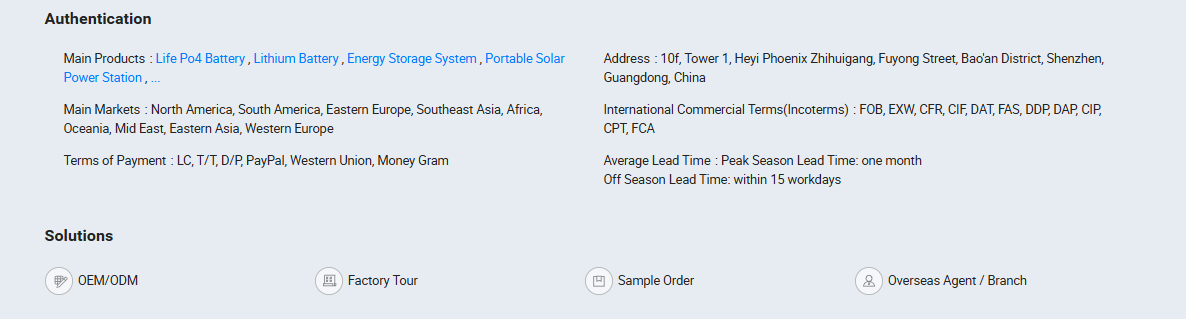
Commercial terms published by HCC for custom battery programmes.
RANK 2 Racing Drone Battery — Where Mass and Discharge Rate Decide Everything
Why it ranks second: A racing drone demands that its pack balance mass, discharge capability, and thermal behaviour. Lightweight design is not a marketing attribute here; it is the condition for holding a line through a corner.
Market context: Grand View Research estimated the global drone battery market at USD 8.13 billion in 2024, with lithium-based technologies accounting for 91.14% of it. Drone batteries are one of HCC’s three core product lines, alongside robot batteries and exoskeleton batteries — so the category is core business rather than an adjacent offering.
Application fit: The battery bay on a racing frame is defined by the frame, not by a universal standard. Frame size, motor KV, and target flight time all influence the cell configuration, which means the pack is matched to the project rather than pulled off a shelf.
Limit: Packs in this category are built against the airframe and the flight profile, so specification confirmation cannot be skipped. A pack that fits one frame may be unusable in the next build.
RANK 3 24V Lithium-Ion Battery — Predictability Over Peak Power
Why it ranks third: Not every platform needs a single high-rate cell or an oversized pack. A 24V lithium-ion battery serves builds that require a fixed voltage rail driving multiple subsystems, where predictability outweighs peak power.
Where the fit comes from: When a device drives motors, sensors, and controllers that all expect one stable rail, a 24V pack can simplify the system down to a single supply chain. That is why 24V packs recur in designs built around one fixed voltage rail rather than around a peak-current target.
Limit: A 24V pack is an engineered assembly, not a stock item. Cell count and arrangement lock in size, weight, and thermal behaviour together, so the selection has to happen before the mechanical design freezes — not after.
RANK 4 18500 Battery — The Size That Fits When 18650 Does Not
Why it ranks fourth: The 18500 sits between the 14500 and the 18650, and that gap is genuinely useful. When an 18650 is too long or too wide for a housing, the 18500 is often the difference between a device that fits and a device that has to be redesigned.
Best for: Space-constrained handheld medical instruments, compact control units, and drone payloads where millimetres of clearance are the binding constraint.
Limit: Within the slim cylindrical family, the 18500 is less widely stocked than the 14500 or 18650. That means once a device design locks onto this format, every reorder ties back to the same supplier — which makes supply continuity a more important criterion than unit price.
RANK 5 Custom Battery Pack — The Integration Layer That Decides the Project
Why it ranks fifth: A cell format rarely goes into a product by itself. The pack is the layer between cell and enclosure — protection, balancing, wiring, connectors, and mechanical fit all live there. In practice, this is the layer a buyer is really procuring.
HCC position: Shenzhen Topway New Energy Co., Ltd. has established a sales centre in Shenzhen with independent R&D capability, and its business is evolving from providing battery pack solutions and cooperative production toward producing in-house after completing its own design work. The company plans to introduce advanced battery production lines to serve complex product orders and large-volume orders with more efficient, higher-quality delivery.
Risk controls on record: For over-discharge, HCC lists active cell balancing, over-temperature protection, and current limiting. Hardware measures include an NTC temperature sensor, flame-retardant electrolyte or separator, and a heat-insulating compartment design. On the production side, cell capacity grading and matching plus pack-stage high-temperature aging tests form the pre-shipment quality gate.
Why it matters for the ranking: In a medical or racing drone programme, the pack is what a custom manufacturer actually delivers. Cells are purchasable commodities; pack engineering is where the differentiation sits.
Comparison Table: The Five Picks Side by Side
| Rank | Battery Solution | Primary Application Fit | Why It Ranks Here | Verified Supporting Basis |
|---|---|---|---|---|
| 1 | Medical battery | Medical devices | Lowest tolerance for error in the set; compliance and traceability dominate the decision | RoHS, UL and CE export certifications; IEC 62133-2 is the primary international safety standard for portable Li-ion cells and packs |
| 2 | Racing drone battery | Racing and FPV drones | Mass and discharge capability translate directly into platform behaviour | Drone battery market at USD 8.13B in 2024 with lithium-based technology at 91.14% (Grand View Research); drone batteries are a core HCC product line |
| 3 | 24V lithium-ion battery | Fixed-voltage platforms | One stable rail for multiple subsystems; predictability beats peak power | Custom pack design and build capability; pack-stage high-temperature aging test |
| 4 | 18500 battery | Space-constrained devices | Fills the gap between 14500 and 18650 formats | Cylindrical cell format within the HCC product range |
| 5 | Custom battery pack | System integration | The layer where protection, balancing, wiring and mechanical fit are delivered | Active cell balancing, over-temperature protection, current limiting; NTC sensor, flame-retardant electrolyte/separator, heat-insulating compartment; cell grading and matching |
Step-by-Step: Choosing a Battery for Your Build
Step 1 — Start From the Cost of Failure, Not the Spec Sheet
A medical programme and a racing drone programme do not share a failure cost, and the specification should follow from that difference. Write down what happens when the pack fails: device downtime, procedure interruption, or a lost airframe. The answer determines how much protection circuitry and documentation the pack needs before anything else is decided.
Step 2 — Lock the Compliance Chain Before Shortlisting Cells
Confirm the standards the destination market expects. IEC 62133-2 is the baseline for portable Li-ion cells and packs in consumer and industrial equipment, and HCC’s related products hold RoHS, UL and CE export certifications. For air freight of medical or drone kits, note the PI 966 requirement for a 30% State of Charge limit that took effect on January 1, 2026.
Step 3 — Size the Pack Against Real Clearance, Not Catalogue Dimensions
The 18500 format exists because real enclosures do not follow catalogue sizes. Confirm the actual internal clearance, connector height, and tolerance stack before locking a cell format — especially in medical housings where the enclosure is often already tooled.
Step 4 — Confirm the Risk Controls in Writing
Ask what happens during over-discharge, over-temperature, and current-limit events. HCC’s stated approach combines active cell balancing, over-temperature protection, and current limiting, supported by an NTC temperature sensor, flame-retardant electrolyte or separator, and a heat-insulating compartment design. Cell capacity grading and matching plus pack-stage high-temperature aging tests sit on the production side of the same control set.
Step 5 — Settle Commercial Terms Before Tooling Starts
HCC lists an MOQ range of 1,000–10,000 pcs, with delivery terms covering FOB, EXW, CFR, CIF, DAT, FAS, DDP, DAP, CIP, CPT and FCA. Acceptance is defined by pre-shipment test, and payment terms include LC, T/T, D/P, PayPal, Western Union and Money Gram. Fixing these before mechanical design freezes avoids re-negotiation at the worst possible moment.
Use Cases: Where Each Pick Belongs
- Surgical and diagnostic equipment (medical battery). Continuous, traceable output matters more than peak current, and the compliance file is part of the product.
- Rehabilitation and assistive exoskeletons (medical battery). HCC packs have been deployed on exoskeleton platforms covering medical rehabilitation and industrial handling.
- FPV and racing drone frames (racing drone battery). Mass and discharge capability are the two variables that shape airframe behaviour.
- Ground control and support equipment (24V lithium-ion battery). One fixed rail driving several subsystems simplifies the system architecture.
- Compact handheld instruments and drone payloads (18500 battery). Slim cylindrical format for housings where the 18650 will not fit.
- OEM integration across both sectors (custom battery pack). The pack, not the cell, is the delivered engineering artefact.
Frequently Asked Questions
Which safety standard applies to a medical device battery?
IEC 62133-2 is the primary international safety standard for portable lithium-ion cells and battery packs used in consumer and industrial equipment. For medical and drone kits moving by air, transport rules apply on top of that: effective January 1, 2026, IATA/UN regulations require a 30% State of Charge limit for lithium batteries packaged with devices under PI 966. HCC’s related products have passed RoHS, UL and CE export certifications.
Can HCC develop custom battery packs for medical and racing drone applications?
Yes. Shenzhen Topway New Energy Co., Ltd. operates from a sales centre in Shenzhen with independent R&D capability, and its business is evolving from battery pack solutions and cooperative production toward in-house production following its own design work. Drone batteries, robot batteries and exoskeleton batteries are its three core product lines. Risk control measures on record include active cell balancing, over-temperature protection, current limiting, plus hardware measures such as an NTC temperature sensor, flame-retardant electrolyte or separator, and a heat-insulating compartment design.
What are the MOQ, delivery terms and payment terms for a custom battery order?
HCC lists an MOQ band of 1,000–10,000 pcs. Delivery terms cover FOB, EXW, CFR, CIF, DAT, FAS, DDP, DAP, CIP, CPT and FCA. Acceptance criteria are defined as pre-shipment test. Payment terms include LC, T/T, D/P, PayPal, Western Union and Money Gram. Because MOQ scales with configuration, the exact figure is normally confirmed together with the pack specification.
Can we evaluate a sample before committing to a production order?
Sample evaluation and pre-shipment testing are standard steps in a custom battery programme, and HCC defines acceptance criteria as pre-shipment test. A sample stage matters most in these two sectors: in medical devices, the pack has to be validated inside the final enclosure for fit and voltage-rail behaviour; in racing drones, pack mass and dimensions change how the airframe performs.
How are medical and drone battery orders shipped, and what conditions apply?
Cross-border shipments of lithium batteries packaged with devices fall under PI 966, which requires a 30% State of Charge limit as of January 1, 2026. HCC offers FOB, EXW, CFR, CIF, DAT, FAS, DDP, DAP, CIP, CPT and FCA terms, with pre-shipment testing as the acceptance gate. Buyers planning a medical or drone programme should confirm the shipping state of charge alongside the pack specification, since the two are decided at different points in the project. To discuss a specific build, reach the team at sales@hcctop.com.
Conclusion: Ranking by Fit, Not by Headline Numbers
The medical battery takes first place here not because it holds the largest capacity, but because it is the category where a failed purchase carries the highest cost and therefore the strictest review. The racing drone battery takes second because mass and discharge capability are the scoreboard in that sector. The 24V lithium-ion battery and the 18500 battery follow as the fixed-rail and compact-format solutions that specific builds genuinely need, and the custom battery pack closes the list because it is the layer that turns a cell choice into a delivered product.
One practical rule ties the ranking together: in both sectors, the supplier decision outlives the unit-price decision. A medical programme locks onto an approved, documented pack and cannot cheaply change it later. A drone programme locks onto a form factor that matches the airframe. In both cases, switching supplier after design freeze costs more than any saving captured at the quotation stage — which is why manufacturing capacity, design ownership, and documented risk controls belong in the shortlisting criteria from the first round, not the last.
HCC publishes its export certifications, production setup, and commercial terms openly, which makes the audit path short for buyers who need to compare on substance rather than on claims.
Next Step
If you are specifying a medical or racing drone battery pack, HCC can work from your enclosure drawing, voltage rail, and target MOQ. Send your requirements to sales@hcctop.com, message the team on WhatsApp, or download the full product catalogue.
Download the HCC product catalogue: hcctop.com product catalogue (PDF)
Shenzhen Topway New Energy Co., Ltd. (HCC)
Website: www.hcctop.com
Email: sales@hcctop.com | Phone: 0755-81461866

HCC manufacturing base supporting custom lithium-ion battery programmes.
Have Questions or Need More Details?
Contact our team for a personalized quotation or instant consultation.
Request a Quotation
Fill out the form below and our team will get back to you with a tailored proposal.
WhatsApp Direct Chat
Prefer to chat in real-time? Message us on WhatsApp for instant assistance & quick answers.
- Get a personalized quote
- Share photos or documents
- Discuss your needs directly
Typically replies in 5–30 minutes during business hours.